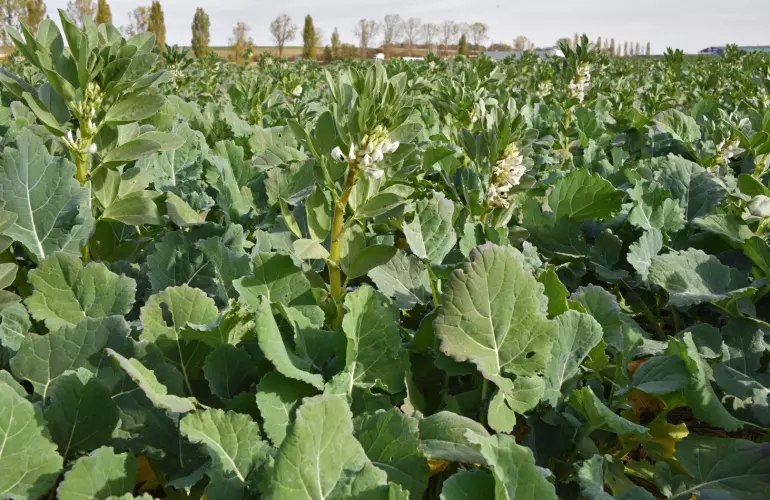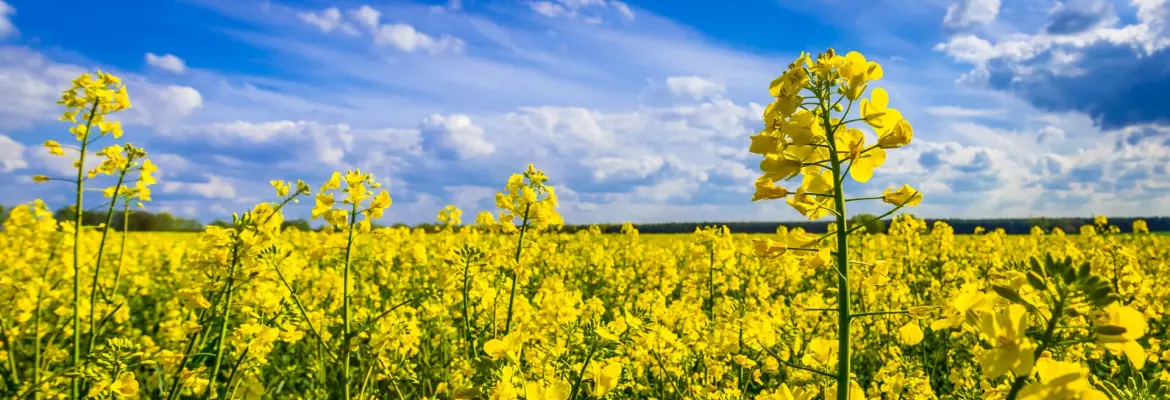
Rapeseed is a high value, strategic crop that should not be overlooked. This fact directly influences technical decision-making. Chemical protection is often used to ensure yields, which means less mechanical weeding.
Nevertheless, tine weeding is a good complement to post-emergence herbicides, especially in cases of heavy infestation. It also helps destroy slugs and preserve moisture in the soil, when done in the autumn. To facilitate tine weeding, the crop should be sown using a precision seed drill. This method of seeding also promotes uniform emergence, contributing to the development of a more vigorous crop.
The most problematic weeds in rapeseed:
- Winter grasses (ryegrass / vulpine)
- Crucifers (capsella, wild radish, mustard, etc.)
- Umbellifers (bishop’s flower, etc.)
- Poppy
- Geranium
- Fumaria
Controlling weeds in rapeseed
When growing rapeseed, weeds need to be managed throughout the autumn months so that the plot is healthy in the spring. Consequently, different strategies can be adopted, with one or more herbicide treatments in the autumn.
When conditions are good, several passes during the autumn, using a mechanical weeding method (especially tine weeding), can reduce the treatment frequency index (TFI).
Agronomic weed management can also be effective. For instance, stale seeding or ploughing before planting rapeseed can reduce autumn grasses. In addition, combining the crop with a frost-sensitive legume will cover the soil, limiting weed growth. In this case, however, water resources must be managed carefully, as these practices tend to dry out the plot.