
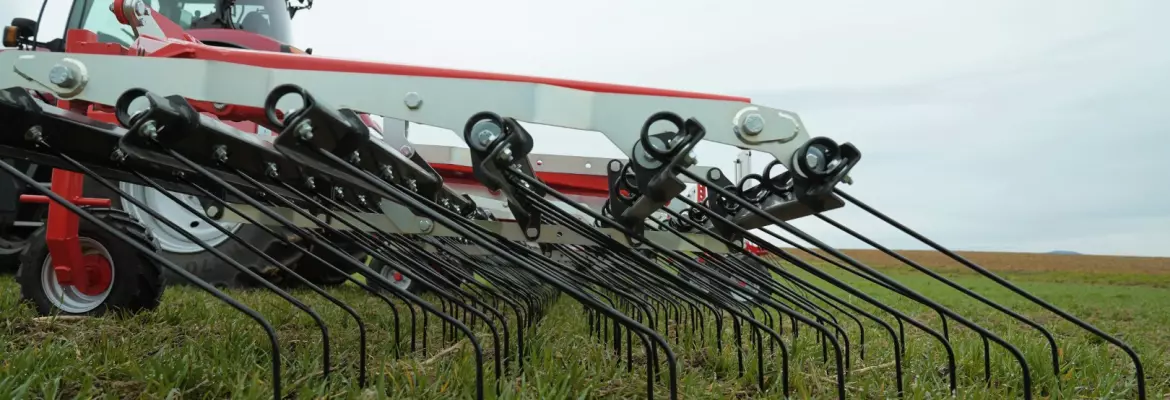
Tine weeding is a mechanical weed-control technique that is becoming more popular due to its effectiveness with weed control and positive agronomic impact. It works particularly well in spring as an alternative to chemical herbicides, as part of an organic or conventional farming system.
What is tine weeding?
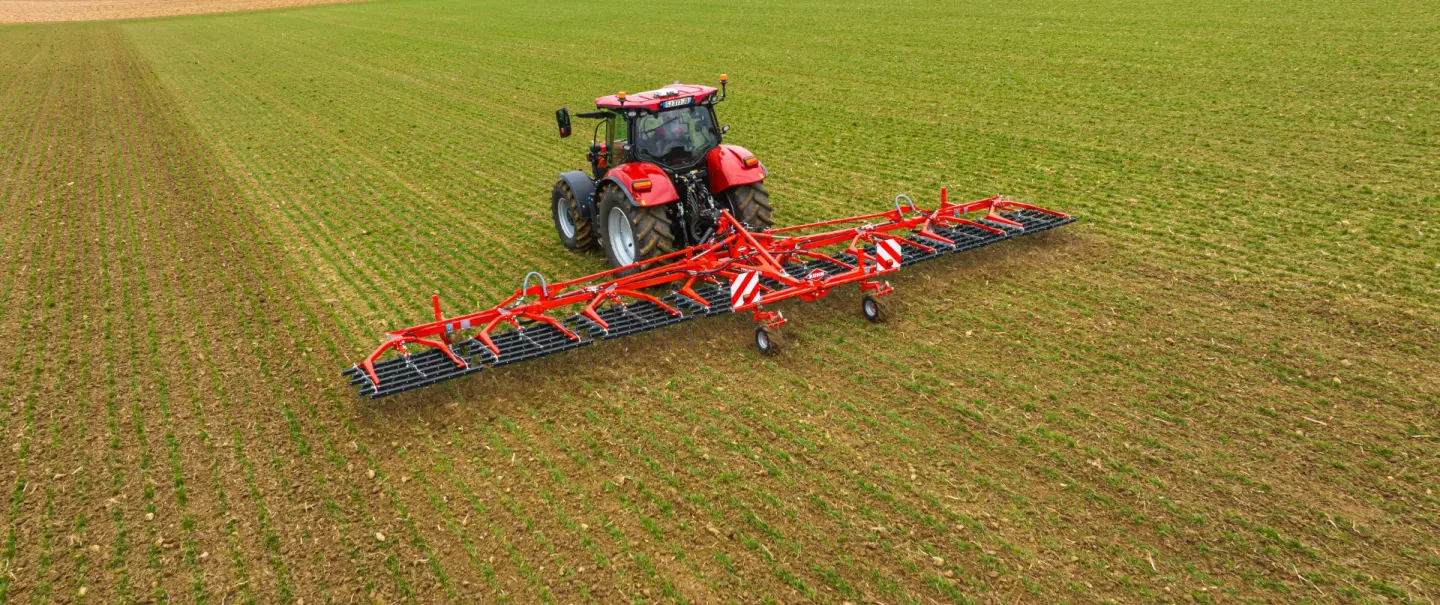
Tine weeding is done by a tine weeder when the crop is already sown. Tine weeders have flexible tines that uproot young weeds, leaving them to dry out on the soil. Tine weeders work the whole plot (row + inter-row) at high speeds, thanks to the large width of the machine and ground-speed capacities.
A tine weeding operation can be carried out at all stages of growth from pre-emergence until the crop is mature. It is effective against young weeds, working independently of rows which is not possible with row-crop cultivation. In addition to weeding, tine weeders stimulate plant growth by improving soil mineralisation, water balance, and cereal tillering.
The advantages of tine weeding
Weed control
One of the main advantages of tine weeding is its great capacity to kill weeds mechanically. Tine weeders scratch the surface of the soil which uproots or damages young weeds, reducing competition with the main crop. When done regularly, especially in the early stages of weed growth, this method reduces weed infestation considerably, so less chemical-herbicide treatment is necessary.
Agronomic benefits
Besides weed control, tine weeding provides numerous agronomic benefits, such as aerating the topsoil. This improves water infiltration and the exchange of gases which is indispensable for root development and soil life.
Tine weeding also stimulates the mineralisation of organic matter, releasing the nutrients essential for crop growth. Lastly, tine weeding contributes to improving the structure of the soil by crumbling clods and reducing surface compaction.
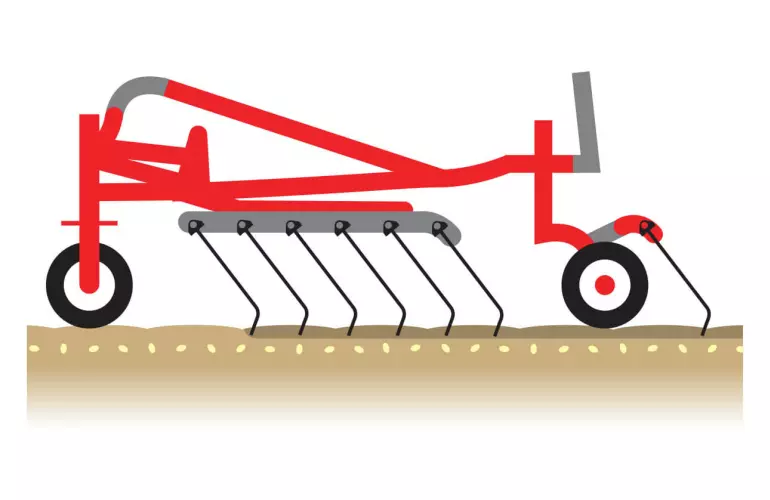
«Blind» pre-emergence pass
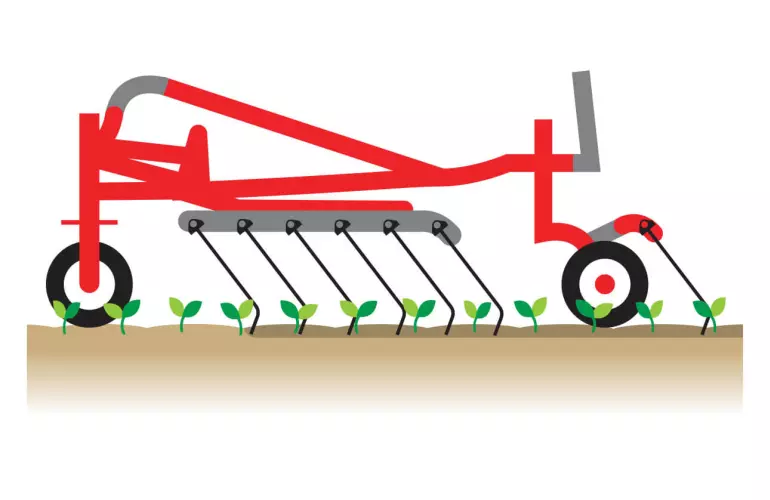
Pass in growing season
Conditions for effective tine weeding
Crops adapted to tine weeding
Tine weeding is a versatile weed-control technique, but it is not suitable for all crops. It is ideal for cereal crops like wheat, barley, and oats, due to tillering, and the capacity of these crops to regenerate quickly after a tine weeding operation. Some dicots, such as sunflower and beetroot, are also suited to this method of weed control, as long as the machine is adjusted correctly to limit damage.
When to carry out tine weeding
For optimum results, tine weeding should be carried out at particular times: ideally when weeds are at the “white shoot” stage or have just emerged, because they are very fragile at this time. It is often more effective to carry out several light operations than just one that is too aggressive. This protects the crop while gradually weakening the weeds. Soil conditions also impact the results: it is best to work in dry, well-drained soil as it is more difficult for weeds to take root again in these conditions.
Effectiveness of the tine weeder depending on the stage of weed growth
White filament | Cotyledons | First leaf | Second leaf | Third leaf | Five Leaves |
|---|---|---|---|---|---|
| 🟢Easy to remove | 🟢Easy to remove | 🟢Easy to remove | 🟢Easy to remove | 🟠Resistant | 🔴Tough |
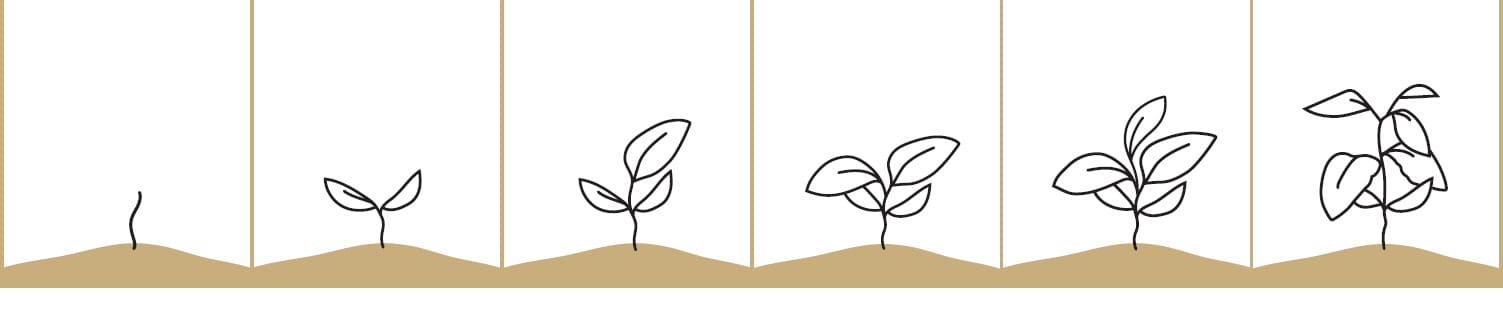
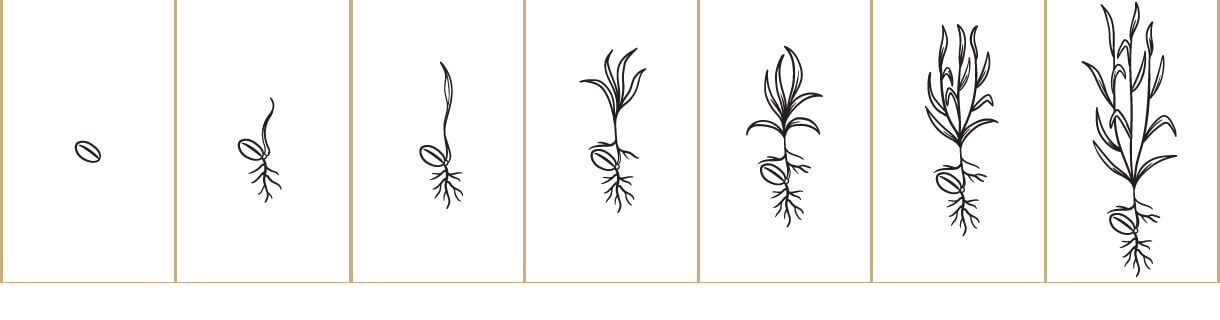
| Post-sowing pre-emergence | Post-sowing germinated | Emergence | 2–3 leaves | Tillering | 1 cm ear | Two nodes ear emergence |
|---|---|---|---|---|---|---|
🟢Pass possible Speed: 8–12 km/h Aggressiveness: ●●● | 🟠With care Speed: 8–12 km/h Aggressiveness: ●● | ⚠️Pass prohibited | 🟠With care Speed: 3–5 km/h Aggressiveness: ●● | 🟢Pass possible Speed: 6–8 km/h Aggressiveness: ●●●● | 🟢Pass possible Speed: 6–8 km/h Aggressiveness: ●●● | 🟢Pass possible Speed: 8-10 km/h Aggressiveness: ●●● |
Combining mechanical weeding, using a tine weeder, and herbicides
An effective weeding strategy often requires combining tine weeding with localised herbicide applications. Tine weeding keeps initial weed emergence under control which reduces the problem and the need for chemical products. Any weeds that resist the tine weeder can be dealt with using a localised herbicide treatment. This integrated approach controls weeds well while reducing the negative impact on the environment.
TINELINER
Discover a tine weeder tailored for you