


Learn how to use mixed weed-control techniques for rapeseed: combining agronomic strategies, herbicides, and mechanical operations for optimum weeding efficiency.
Agronomic context and challenges
Rapeseed is a strategic crop due to its high added value, so failure is not an option. This fact directly influences technical decision-making. Indeed, chemical protection is often chosen over mechanical weeding in order to guarantee yield. Rapeseed is a fragile plant that does not fare well with tine weeding. On the other hand, it is well suited to row-crop cultivation, due to:
- a long intervention period in the autumn,
- excellent spreading/branching-out capacity
- good weed-covering capacity in spring.
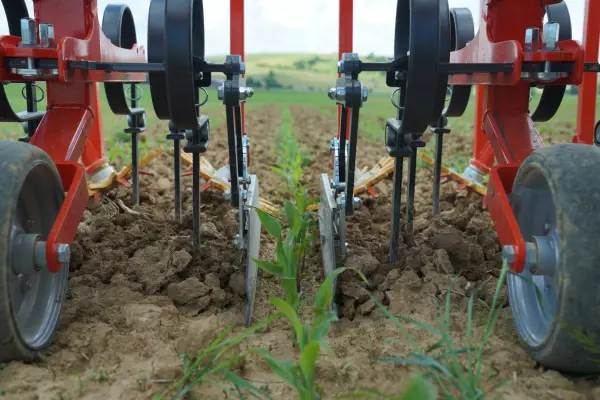
Row-crop cultivation complements post-emergence herbicides well, especially in cases of heavy grass-weed infestation (mainly ryegrass and vulpine), or autumn dicots (geranium, wild radish, etc.). When carried out in autumn, it also kills slugs and preserves humidity in the soil. Late row-crop cultivation, with Lelièvre blades, a row-crop cultivator with fingers, or a ridge along the row can be 50 to 100% effective*.
What agronomic strategies can be implemented to reduce weeds in crops?
Stubble cultivation and stale seeding
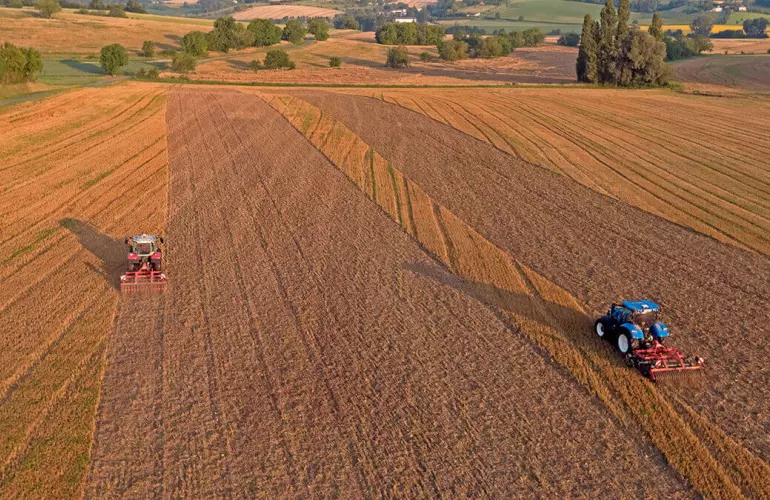
Rapeseed can be complicated to weed. It is necessary to combine methods and adapt the weed-control strategy as soon as the previous crop is harvested. Rapeseed is an oilseed crop that is well suited to stubble cultivation and stale seeding in summer. These techniques are very effective against grasses (vulpine and ryegrass) and shoots from cereal regrowth before sowing the crop. It is important not to allow the seedbed to dry out too much, though, especially in dry conditions.
Combining crops
In order to make rapeseed more competitive during the early stages of growth, it can be worthwhile to plant a frost-sensitive crop with it. Buckwheat, legumes, such as field beans, and clover will cover the soil while the growth of the rapeseed is slow due to low nitrogen levels. Planting one of these additional crops will nourish the soil before disappearing with the first frosts.
To facilitate row-crop cultivation, it is recommended to sow frost-sensitive crops directly in the row.
Learn how to optimise nitrogen by intercropping with legumes
Possible treatment periods depending on mechanical weeding tools
| Crop stage | Pre-emergence | Cotyledons | 1 leaf | 2 leaves | 3 leaves | 4 leaves | 5 leaves to regrowth | Weed stage |
|---|---|---|---|---|---|---|---|---|
| Rotary hoe | With care 12 – 15 km/h | Pass possible 10 km/h | Pass possible 10 – 15 km/h | With care 10 - 15 km/h | White filament to 1st leaf | |||
| Tine weeder | With care 7 - 8 km/h Aggressiveness: ● ●● | ⚠️Pass prohibited | ⚠️Pass prohibited | With care 2 km/h Aggressiveness: ● | Pass possible 3 - 5 km/h Aggressiveness: ● ● | Pass possible 5 - 8 km/h Aggressiveness: ● ● ● to ●●●● | White filament to 3–4 leaves | |
| Row-crop cultivator | ⚠️Pass prohibited | ⚠️Pass prohibited | ⚠️Pass prohibited | With care 2 km/h with plant protectors | Pass possible 3 - 4 km/h with plant protectors | Pass possible 5 - 6 km/h | 3 leaves and more | |
Weed-control programmes for rapeseed
| Modality | Pre-emergence | Cotyledons | 1 – 4 leaves | 4 – 8 leaves | End of rosette formation | Growth restart |
|---|---|---|---|---|---|---|
| BBCH | 0-9 | 10 | 11 - 14 | 14 - 18 | 18 - 19 | 19 - 32 |
| Option 1 All chemical | 🟢💦 | 🟢🟠💦 | ||||
| Option 2 Mixed, on faba beans | 🟢💦 | |||||
| 1–2 passes 🟢row-crop cultivator | 1–2 passes 🟢row-crop cultivator | 🟠row-crop cultivator | ||||
| Option 3 Mixed, on peas | 🟢💦 | |||||
| 🟢⚙️ or ↘ | 🟢row-crop cultivator | 🟢row-crop cultivator | ||||
| Option 4 All mechanical | 🟠⚙️ or ↘ | 🟢⚙️ or ↘ | 2 passes 🟢row-crop cultivator | 🟢row-crop cultivator | 🟠row-crop cultivator |
🟠optional 🟢essential 💦chemical ⚙️rotary hoe or ↘ tine weeder
Purely chemical
There are different chemical programmes for weeding rapeseed. Several product applications can be carried out before sowing, pre-emergence, or post-emergence, depending on weather conditions and the severity of the weed situation.
Mixed strategy combining chemical and mechanical methods
When mixing methods, it is possible to delay the application of a chemical product until post-emergence because the early-autumn weeds will have been kept at bay with the row-crop cultivator.
A post-emergence herbicide needs to be effective in order to keep weeds away until spring. For weed emergence in spring, it is better to destroy them with a row-crop cultivator because a chemical solution will be ineffective.
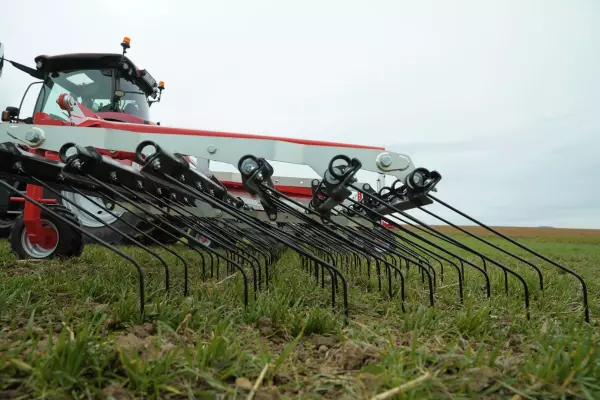
It is complicated to use a tine weeder in rapeseed, but it is possible to use a rotary hoe in a young crop.
Purely mechanical
It is possible to weed rapeseed without chemical products, by working the plot with a rotary hoe and a row-crop cultivator from the moment of seeding to the start of spring growth. This method can be risky in wet years, however.
Recommendations
Row-crop cultivation is the method that works the best in rapeseed in terms of mechanical weed control. The technique needs to be planned ahead by sowing the crop in wide, regular rows to. KOSMA and MAXIMA precision seed drills are particularly suited to this type of seeding as well as enhancing fast, uniform emergence.

Sources:
*Désherbage mécanique ou mixte du colza avec binage, Terres Inovia, 2021
Désherbage mécanique ou mixte du colza avec herse étrille, Terres Inovia, 2020
Désherbage mécanique ou mixte du colza avec la houe rotative, Terres Inovia, 2020
Désherbage mixte, l’alliance du chimique avec le mécanique, Chambre d’agriculture des Hauts de France, 2022
Les stratégies herbicides pour le colza, Terres Inovia, 2024