
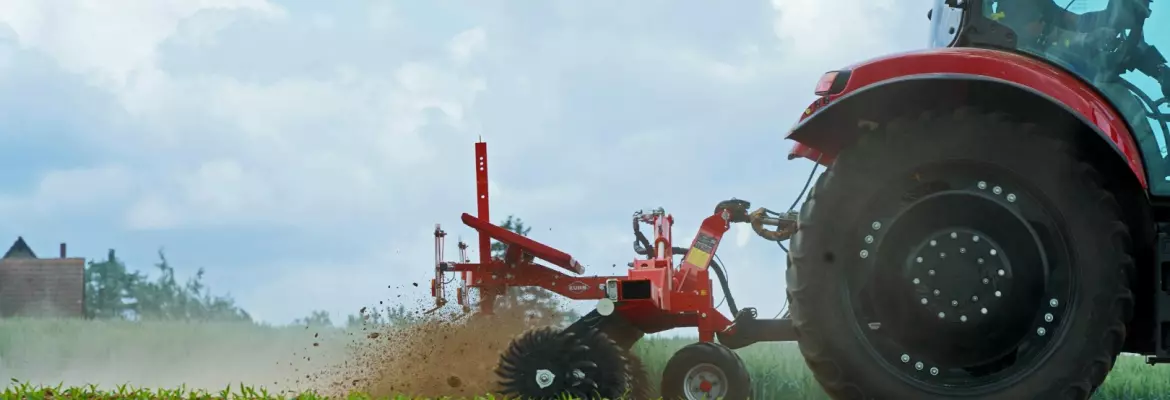
Soil slaking is a major agronomic problem which affects many agricultural regions.
The crusts that form on the surface of the soil can cause adverse effects, notably:
- Limiting water and air infiltration
- Enhancing erosion
- Interfering with seed germination
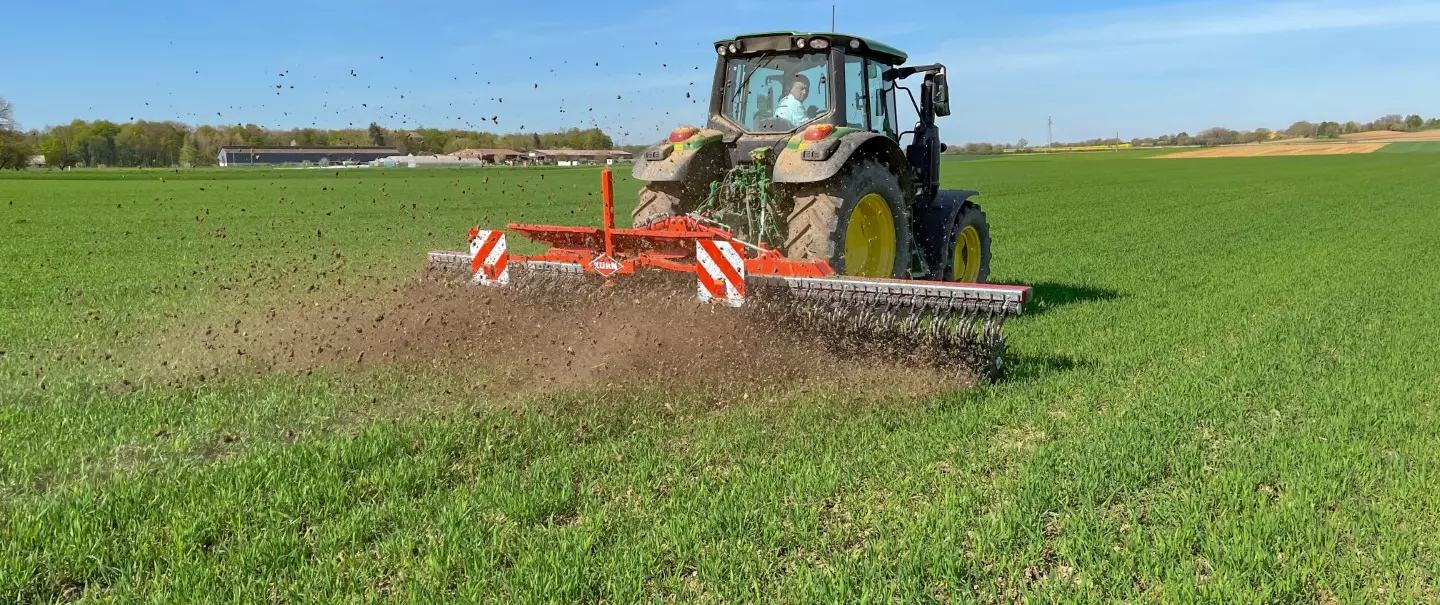
Luckily, there are solutions, such as using a rotary hoe, a precious tool for breaking up slaking crusts. However, it is necessary to protect and restore the structure of the soil sustainably with additional strategies.
Slaking crust: definition and impact on the soil
What is slaking crust?
Slaking crust is a fine, hard, and compact layer that forms on the surface of the soil. It is caused by rain drops and is characteristic of silty soils.
Surface aggregates fragment and fill the pores as they disintegrate, then, with the impact of repeated rain drops, a compacted area forms on the surface. The formation of this impermeable crust prevents water and air from infiltrating the soil, which can cause soil asphyxiation and erosion. In other words, slaking crust is a phenomenon of structural degradation that affects the capacity of the soil to perform its ecological and agronomic functions.
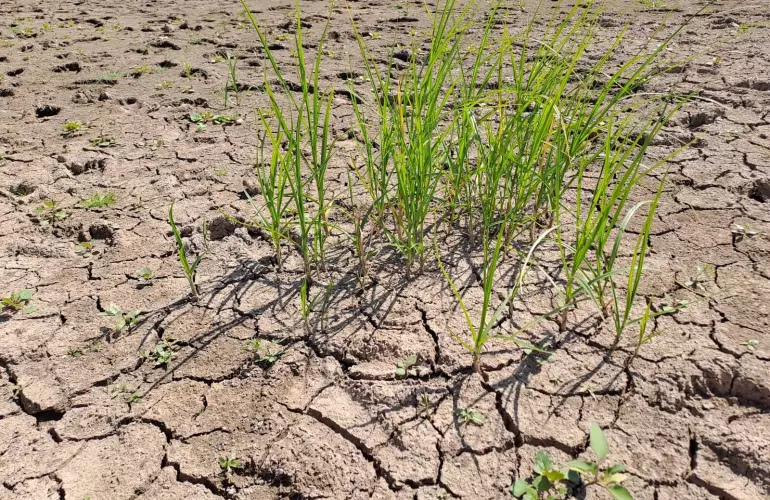
Why slaking crusts form
Different factors contribute to the formation of slaking crusts. One major cause is the direct impact of rain drops on naked soil, because the drops of rain do not land on plants but hit the soil directly. Other factors play a significant role too, particularly:
- Low organic matter content in the soil, leading to poor structural stability.
- Excessive soil preparation, such as ploughing, which makes the structure of the soil more fragile and vulnerable.
- Soil type: soils rich in silt are particularly susceptible to this phenomenon.
The consequences of slaking crust on a crop
The formation of slaking crust leads to many damaging consequences, such as:
| Problems related to slaking | Consequences |
| Germination | Hinders seed germination as they cannot push through the compacted layer. |
| Water infiltration | Since water cannot infiltrate locally, it runs off causing intense erosion. |
| Gas exchanges | The exchange of gases is blocked, causing the asphyxiation of micro-organisms in the soil that can no longer breathe. |
To prevent slaking, it is crucial to cover the soil between crops and integrate practices that protect the structure of the soil.
Agricultural techniques against slaking
Using a rotary hoe
The rotary hoe is a precious tool for combatting slaking. By penetrating and turning the crust, the hoes break through the surface and send the compact aggregates backwards to break them up.
Rotary hoes are particularly effective in silty soils. However, it is important not to overuse this method, because excessive tillage can mineralise the nutritional elements in the soil which reduces organic matter. When organic matter is lost, it leads to a more fragile and vulnerable soil structure in the long term.
Cover crops are your allies
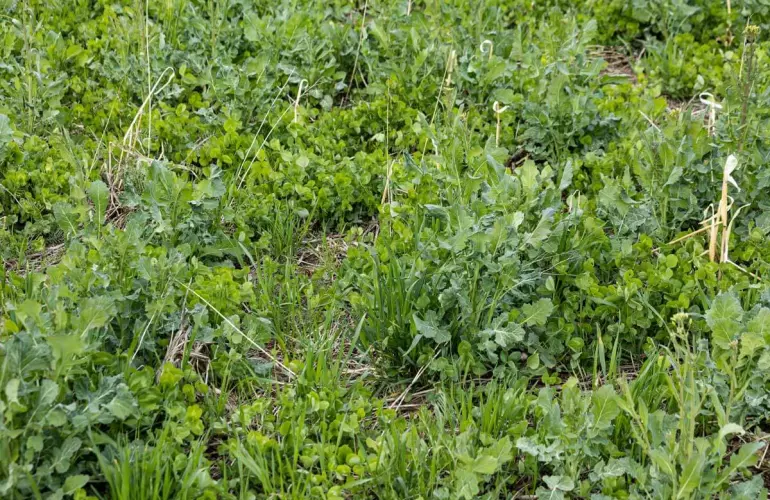
Cover crops play an essential role in preventing slaking. By covering the surface of the plot, they protect the naked soil against the direct impact of rain drops. In addition, cover-crop roots improve structural stability by creating a root network that holds soil particles together. Organic matter from decomposed plant-cover residues also helps improve the structure and water-retention capacity of the soil.
Improving the structure of the soil
Soil-structure improvement is a fundamental approach for combatting slaking. When the structure of the soil is good, it is porous, allowing water and air to infiltrate and circulate. To improve the structure of the soil, it is necessary to increase the content of organic matter. This can be achieved by adding compost, manure, or other organic inputs. Planting a cover crop is also a great way of enriching the soil in organic matter and improving its structural stability. It is important to avoid excessive soil preparation too, such as ploughing or using power tools that break up aggregates and make the soil more sensitive.
STARLINER
Discover a rotary hoe tailored for you