ROWLINER
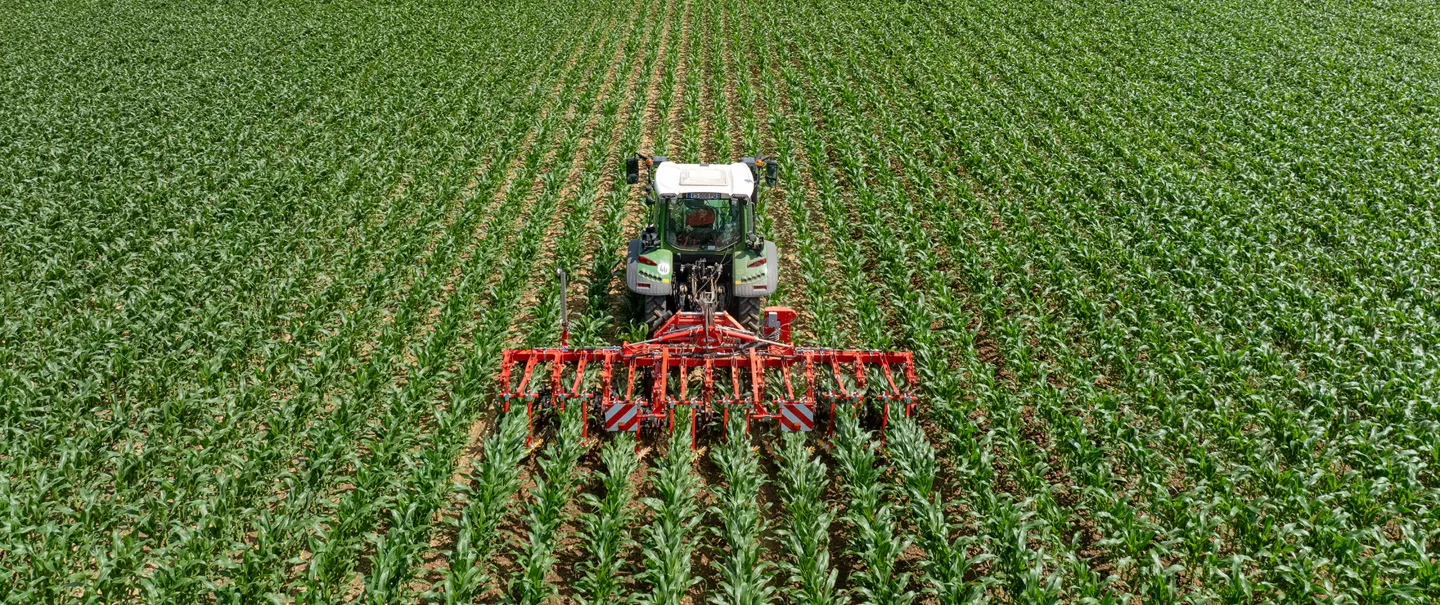
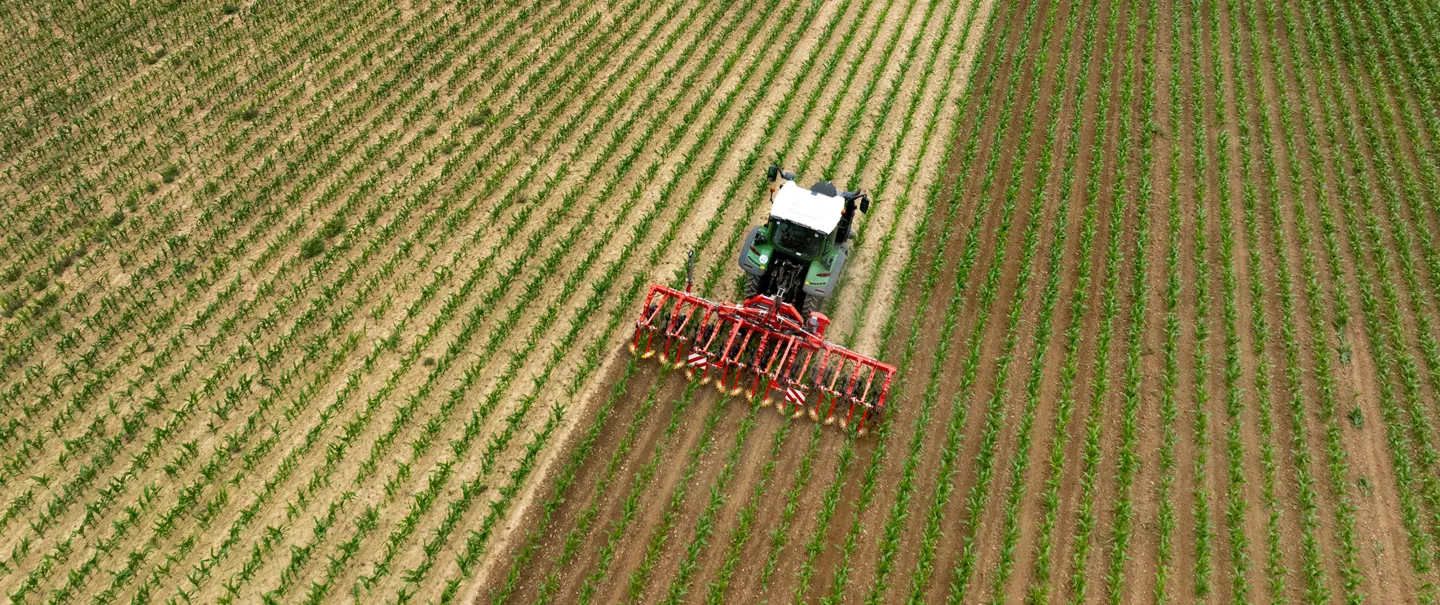
ROWLINER row-crop cultivators are designed especially for weeding row crops such as maize, sugar beet, and sunflower; they come in 6- and 8-row versions with spacings of 75/80 cm, as well a 12-row model with spacings of 45/50 cm.


KUHN row-crop cultivators: precise and efficient mechanical weeding, soil aeration, and weed control for healthy, high-yield crops.
ROWLINER row-crop cultivators are designed especially for weeding row crops such as maize, sugar beet, and sunflower; they come in 6- and 8-row versions with spacings of 75/80 cm, as well a 12-row model with spacings of 45/50 cm.
A row crop cultivator is a tillage tool used to manage weeds and work the soil between the rows. Mechanical weed control removes weeds without herbicide, which helps protect the environment. Cultivators are widely used in organic farming, alongside weeders and rotary hoes, and they also suit strip-till systems. Their versatility makes them a valuable piece of farm equipment: they adapt to different crops and soil types and are mainly used for row crops such as maize and beetroot, with a wide range of equipment combinations.
These machines destroy weeds by scalping the surface. Working the surface also breaks up slaking crusts, letting air into the ground for better water availability and healthier plant roots. Each row unit carries a sweep or shares that slice off weeds, sever weed roots and throw soil onto the row to bury young weeds.
The foldable KUHN ROWLINER is a precision row crop cultivator built on a long parallelogram, so each row unit closely follows ground contours and gives strong penetration, even in dry conditions. It works the inter-row area of crops spaced at 45/50 cm or 75/80 cm, destroying weeds while keeping row crops healthy. Its tine and shank set-up adapts to different soil types and crops, so it controls weeds with precision and saves you time and energy.
An optional rotating finger weeder, with two rubber stars per row, works right up to the crop row and even between plants. For the best results, settings must be adjusted precisely to avoid crop damage.
For extra comfort and automatic alignment with the rows, the cultivator can be steered by a camera, a mechanical feeler or wand guidance. Combined with suitable guidance systems, this keeps the tool positioned to work right up to the row with precision.
Our range of row-crop cultivators DISCOVER
Row-Crop CultivatorsThey attach to the rear of the tractor through the three-point hitch and follow the rows. The heavy-duty mainframe acts as a toolbar carrying each row unit, and as the machine moves forward, the shares penetrate the ground and scalp weeds between the rows. For the best working efficiency, match the row spacing and number of rows to the drill used for seeding. For precise guidance, the ROWLINK interface tracks the row via camera, with a lateral movement range of +/- 25 cm.
Several criteria matter when choosing a machine. The most important is to have the same number of units and the same spacing as the drill used to sow the crop, so the working width of the cultivator should match the drill width. KUHN toolbars come in several sizes to make this simple. Once this is met, the right set-up depends on each grower and their conditions. For example, on abrasive soil, carbide shares are a better choice than standard ones.
Crop shields are also important: you can choose deflector plates or discs depending on whether you have stony ground or high residue, and discs also help with residue cutting. To cover the weeding row as well as the space between rows, you can add the finger weeder, ROWLINK camera guidance to work close to the row, and Section Control, which uses a hydraulic cylinder to lift each unit automatically at the end of the plot. This lets you work right to the headland and handle point rows cleanly.
Row-crop cultivation is a form of mechanical weed control and soil cultivation that removes weeds while respecting the environment, because it can replace chemical spraying. Using a row crop cultivator to cultivate between rows improves soil structure and boosts plant growth. It is particularly well suited to row crops, where passes can start at a very early stage. It also fits well with strip-tillage, where it supports good residue management.
Mechanical cultivation is a highly effective way to keep weed pressure down. When done well, it brings major benefits:
Warming the soil faster to speed up growth in spring crops.
KUHN’s mechanical weeding tools
Discover the full range
Row crop cultivators work between rows and are more aggressive, so they can deal with more mature weeds.
Weeders and rotary hoes work the whole surface (including the row) and are better suited to small weeds (white thread to cotyledon stage).
Keep it as shallow as possible, generally 2 to 5 cm, to cut weeds without bringing new weed seeds to the surface.
The gauge wheels on each unit provide depth control.
Ground speed directly affects aggressiveness and work output. The faster you go (for example 8 to 14 km/h with auto-guidance), the more earth is thrown onto weeds in the row (mound effect).
The seed drill and the cultivator must have the same number of rows and the same spacing.
An auto-guidance set-up (camera, RTK or sensor) is highly recommended for working right up to the row without harming the plants. It also increases work output.
You can start as soon as the row is visible and the plants are well rooted.
In maize, cultivation is possible from the 3-4 leaf stage to around 7-8 leaves, up to the tractor clearance limit, or until the plants become too fragile.
Yes, especially for the first pass in young row crops such as maize or sunflower. Plant deflectors (discs or plates) stop earth being thrown onto the seedlings, which could smother or damage them.
It depends on row spacing and the effect you want: