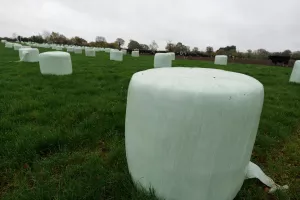
Although Ben and Jonathan Charmley don’t own their round baler, they reserve high praise for their contractor’s Kuhn combination baler and wrapper, which offers them flexibility in their transition towards a more regenerative dairy system.
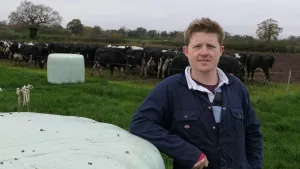
Extending grazing in the shoulders of the season for dry cows and in-calf heifers is an important part of Ben and Jonathan Charmley’s extensive grass-based approach to dairy farming at Kennels Farm, near Whitchurch in north Shropshire.
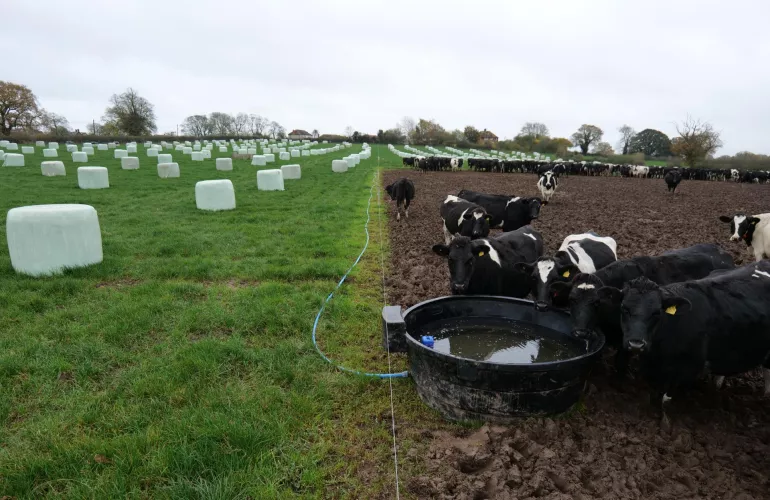
Creating what Ben describes as an outdoor shed between October and mid-December, the system takes pressure off housing at a critical time whilst providing a healthy environment for the stock. It is also an integral part of the farm’s reseeding policy.
Silage, fed in ring feeders to supplement the autumn grazing, is an essential ingredient, and having this in the form of well-made round bales that retain their shape and quality despite multiple handlings is key to overall success.
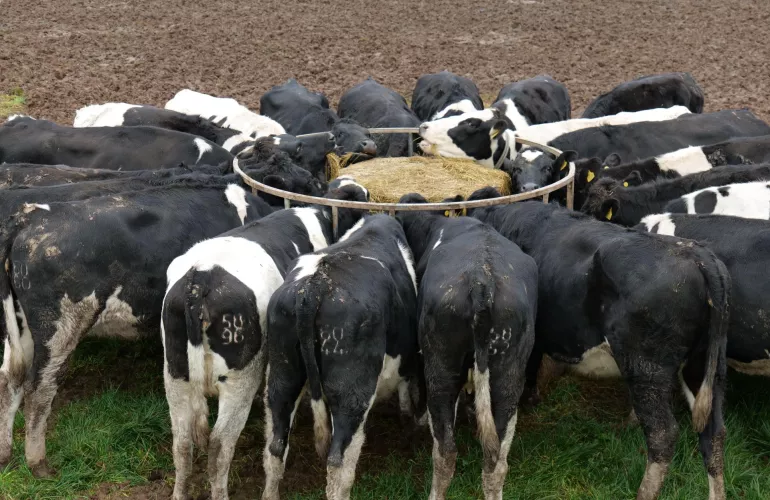
The round bales are made from grass that becomes surplus as the 500-cow spring block-calved milking herd makes its way around the paddocks throughout the grazing season. Baling what is usually stemmy, poorer quality grass, in relatively small parcels, is far more efficient than trying to clamp it.
“We have a great relationship with A.R. Richards contractors, and we also really like their Kuhn combination baler-wrapper,” says Ben. “The fact that they can come with just one tractor and one machine to bale and wrap is so much easier and more efficient for a job like this. Also, the Kuhn has the film binding system, which means we avoid the problem of having net to contend with, which had always been a nightmare in the past.”
The Kuhn FBP 3135 baler-wrapper combination’s film binding system uses the same 750mm stretch-film rolls as the machine’s bale wrapper, simplifying operations and leaving just a single waste material to deal with. Whilst there is a net binding option, film binding is now the method of choice for most, giving the added benefit of an extra layer of seal that significantly reduces the risk of damage and spoilage.
The machine run by A.R. Richards also uses Kuhn’s 3D wrapping system, which ensures optimum coverage of bales, and has the Intelliwrap feature that gives the operator ultimate flexibility in selecting the number of film layers to apply. The result is consistent square-edged bales, without weak points where air ingress might become a problem, and an overall saving in the amount of film being used.
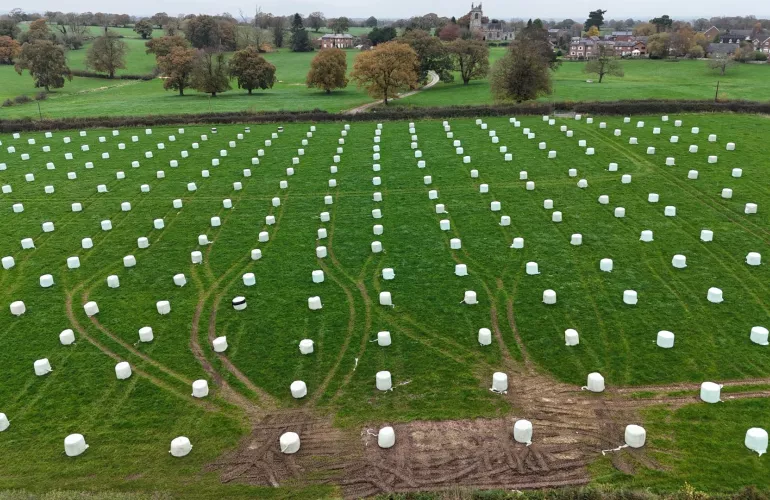
“As the bales are made over the summer, we initially stack them in the field where they are going to be used,” says Ben Charmley. “We then lay them out in the extended grazing paddocks in October, but the bales always retain their shape and integrity well despite being handled at least twice. The film binding system certainly reduces the risk of rips in the wrap, which ultimately means we see less spoilage.”
The move to a more sustainable, regenerative type of dairy farming has largely been Ben and his brother Jonathan’s initiative, converting the farm from a more intensive system. The introduction of Jersey bloodlines into the original Holstein Friesian genetics has created a small, but robust and powerful crossbred that is well-suited to the system. The leys now grown across the farm are more resilient, having greater diversity with increased clover content and herbal elements like plantain and sheep’s burnet being included.
“The overriding aim is to produce as much milk as possible from grazed grass,” adds Ben. “The cows are now averaging around 6,500 litres, and we aim to keep concentrate feed levels somewhere between 0.5 and 0.75kg/cow.”
The extended grazing area is carefully selected, being within the 60 acres of sandy loam soils that contrast with the heavier land predominating at Kennels Farm.
Careful management is required, with the land vacant from September to ensure there is sufficient cover to help the ground tolerate the wetter conditions, but not so much that grass is wasted. In October, Ben measures out the grazing area and places bales in situ, so the only daily job is moving the fence and place the ring feeders over the next bales.
“We avoid using ground where the soil indices are too high,” adds Ben. “The cows are effectively mucking it whilst they are grazing, so you want lower indices to avoid the risk of leaching over the winter.
“We monitor the cows closely when they are on the extended system, in particular their intake of silage, and always have the flexibility to move cows inside – or turn more cows outside – depending on conditions.”
Working to its optimum, the cows clean up the silage as they go, with a back fence being moved behind them as they progress uphill, allowing ground to rest and recover before it is reseeded in the spring.
“The extended grazing is an important part of our sustainable approach to dairy farming. It’s good for the land, good for the cows, and helps us to control costs and therefore continue to produce milk profitably. Being able to make and feed good quality bales is an important part of its success,” concludes Ben.