
Maximising fodder stocks this season will be imperative for many farmers, and that means setting up the mixer wagon to ensure a consistent, efficient mix that supports animal development while minimising time input and fuel use. We spoke to Kuhn product specialist, Sam Alford, about the right settings for the company’s Profile range.
“Cows can spot an inconsistent ration from miles away, which will result in the stronger animals filtering through the ration to feed on the more palatable constituents, leaving the smaller cows to consume the lower energy, fibrous parts. This can lead to uneven growth rates in the herd, inconsistent milk production or fodder passing through animals too fast, all of these make herd management harder.”
Sam says a lot of the inconsistency can be solved by improving the ration mixing and delivery. Problems can be caused by different factors in the mixing process, but ironing these out will help all the animals get the nutrients they require and reduce wastage.
“We want to achieve a consistent ration with all parts of the mix – whether that’s straw, chopped silage, minerals or liquids – being fully broken down and comprehensively mixed to ensure all the animals eat the whole ration that is presented to them.”
Understanding how to set up the machine correctly to achieve this will ensure the most efficient mix is reached in the shortest time possible.
1. Adding the material in the right order
A consistently mixed ration is directly linked to the order that each component part is added to the mixer wagon. Getting this correct will not only ensure a more complete mix but reduce mixing time and fuel use.
“Always add your long, fibrous materials, like straw, first. This is because straw takes the longest to break down and should be at the bottom of the tub with heavier, shorter materials, such as silage and maize, added next to weigh down the straw and ensure a consistent mix. Next up should be rolled barley, powders and proteins, with wet additives added last.”
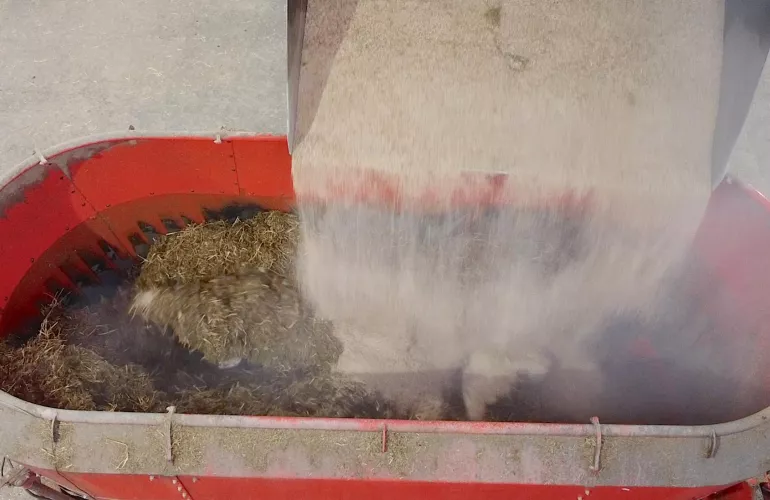
If this order is reversed, the wet additives and powdered materials would sink to the bottom while the fluffier, lighter straw will sit on top of the mix and never become fully incorporated, leading to inconsistencies and longer mixing times.
2. When to engage counter knives
“Counter knives can be engaged either manually or hydraulically and are essential to break down longer fibrous material and shorten mixing times. These knives slow down the crop flow to achieve a quicker mixing process by providing additional chopping force on each auger rotation.”
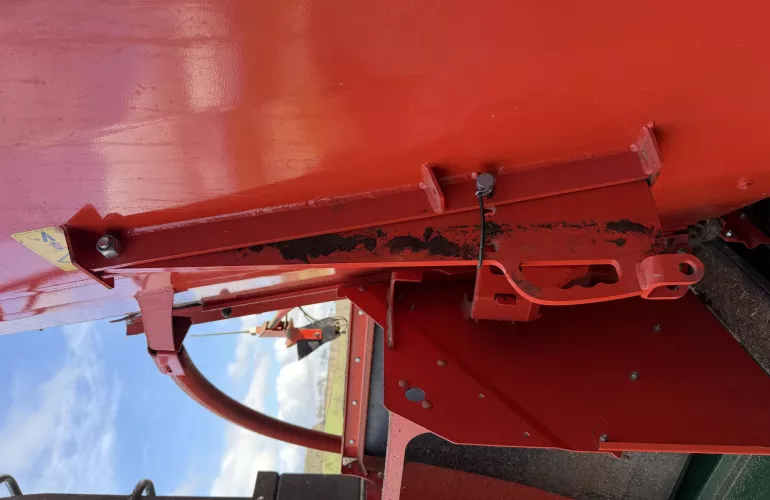
Users should engage these when mixing longer, less palatable materials, such as whole round bales, but remove them for shorter material as greater chopping force isn’t required.
3. Reducing floor wear to improve mix consistency
A common frustration for mixer wagon owners and users is the tub floor wearing out faster than the sides due to material being dragged across the metal and not lifted away from it on each cycle.
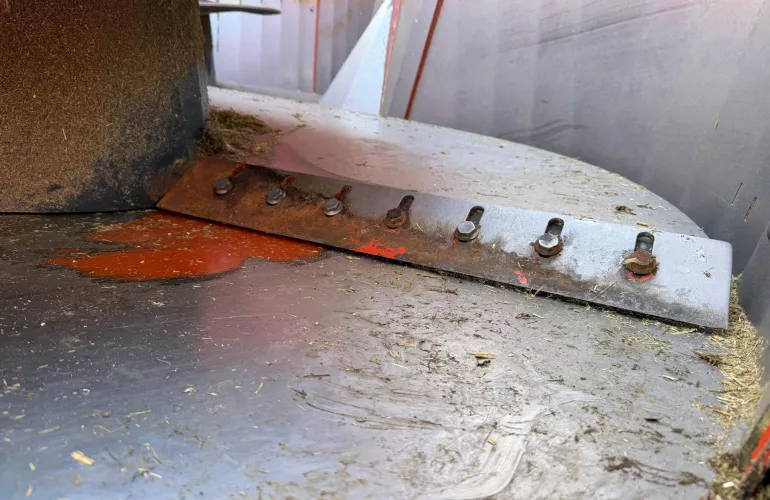
“Preventing floor wear can be achieved through an adjustable wear edge, fixed via a series of bolts to the lowest part of the Kuhn Profile auger, to maintain a precise 4mm gap between the auger and the floor,” says Sam.
“This stops material from getting trapped and grinding against the floor, protecting the floor from premature failure. Operators should check the gap regularly to ensure it’s maintained.”
4. Auger design is important for longevity
A well-designed auger should lift fodder from the bottom of the mixer tub up to the top on a continuous cycle, ensuring a complete mix and no material being dragged along the floor.
“Kuhn Profile mixers use a continuous auger helix that naturally lifts fodder from the bottom to the top of the tub. These feature a double-pitch angle on the top quarter of the auger flighting to increase mixing speed as the fodder leaves the auger to prevent material spinning in the same place at the top of the auger. This also helps to break down large straw bales quickly.”
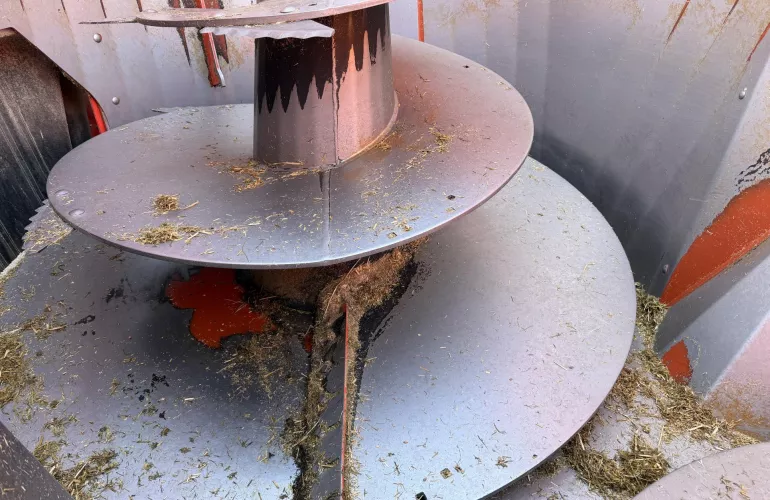
On twin and triple auger machines, the auger rotation is timed to create a figure of eight to eliminate any dead zones in the tub. To improve longevity of major wearing components further, Kuhn offers a K-NOX option for the main auger flights, central cone and cap, the bottom adjustable wear edge, knives, and all integral welds to avoid premature failure, increasing the life of the augers.
5. Even mixing relies on the right tub design
“It may surprise some operators, but Kuhn uses a 15mm thick floor on its Profile range, which is thinner than many competitors. This is because the bulk of the mixing takes place on the polygonal-shaped sides of the tub, which slows the ration down for better consistency, with folded sides adding further strength.”

For greater protection, a 4mm thick, 800mm high K-NOX liner can be installed to improve longevity. Further strength of the tub is also provided by integrating the tub into the chassis, without needing expensive stainless steel options.
6. Avoiding old forage causing digestive upset
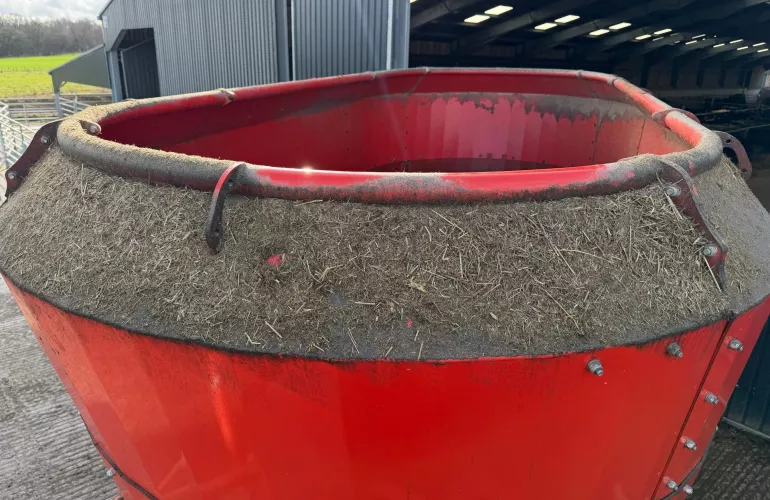
Cleanliness during the feeding process is paramount to reduce the potential for digestive problems, and a large part of this is preventing materials sitting on top of the tub and working their way into a ration weeks later.
“Profile wagons feature an integral sloped hay ring to ensure forage stays inside or outside the tub, never allowing it to perch hazardously on top. This prevents unsightly material on the top edge and stops old food from falling back in and causing nutritional problems for cows.”
7. Driveline design will support reliability
Mixer wagons are in use daily during the winter, which means reliability is essential. Kuhn integrates the auger gearbox directly into the tub floor, reducing driveline links and maintenance.
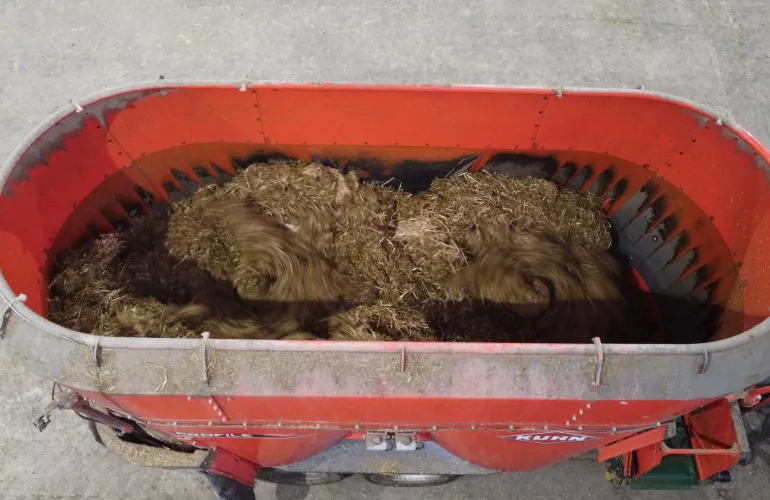
“The Profile wagons also feature a self-contained oil reservoir to remove the daily requirement for greasing. These reservoirs require an oil change every 1,500 hours,” adds Sam.
The two-speed gearbox option allows users to restart the tub when it’s full at a slower 16rpm to reduce the strain on the driveline, before switching to 29rpm for a faster mix.
8. Feed delivery options can improve yard setup
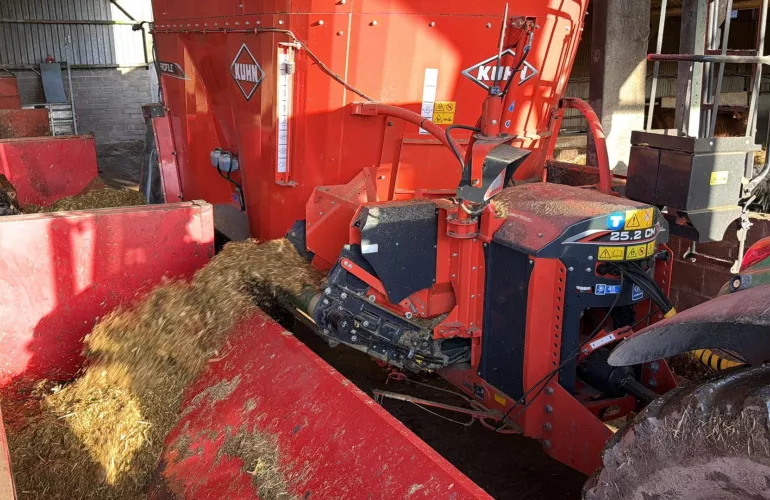
In tight yards with restricted access and tall feed barriers or troughs, having the flexibility to use different feed delivery options can speed up daily tasks and prevent feed passages from always being floor level.
“Kuhn’s Flexilift tilting cross-conveyor option on its Profile wagons offers a maximum feed delivery height of 1.3m at a 45-degree angle to reach into high troughs. The conveyor hydraulically retracts into the machine’s width for transport.”
9. Weighing systems guarantee ration accuracy
With forage at a premium and inputs costs high, guessing the quantities of different materials required may increase wastage. Kuhn’s DG 600 weighing system allows users to build ration recipes in the office and transfer them directly to the machine.
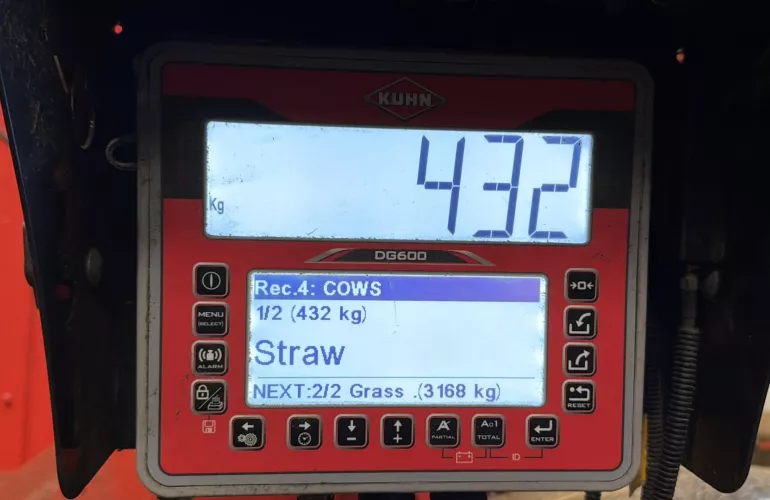
“It works using three highly accurate load cells on single-axle models, and five on twin-axle units, with the system providing accurate readouts for even the smallest ingredient additions or part loads. The system automatically reduces the quantities of the ration depending on the number of cows you plan to feed that day.”
Further to this, Profile mixer wagons offer over 250 different options across the range to suit any shed design or delivery requirements.