
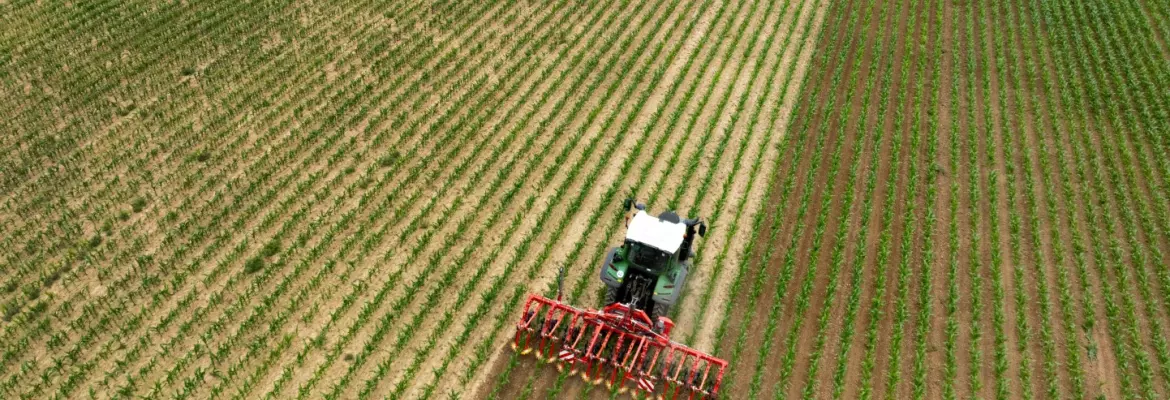
Mechanical weeding is a sustainable alternative to herbicides that can be very effective when done well. You’ll find in this article a few tips for getting started.
Choose the right mechanical weeding tool
The three mechanical weed control tools in the KUHN range have complementary features: ROWLINER row-crop cultivator, TINELINER tine weeder, and STARLINER rotary hoe.
Combining the tools is what gives you flexibility. It is not necessary, however, to have all of the machines when getting started with mechanical weeding. It is necessary, though, to choose the one that suits your farm: crop types, soil conditions, availability of labour, etc.
| Comparison | Tine weeder | Rotary hoe | Row-crop cultivator |
|---|---|---|---|
| Crop types | All crops, especially cereals | All crops | Row crops (maize, sunflower, beet) |
| Stage of intervention | Pre-emergence, young crop | Pre-emergence, early stages | Developed crops |
| Limiting conditions | Surface residues | Stony ground | Slopes |
| Work output | High | High | Low |
Plan ahead and intervene at the right moment
- Stage of weed growth: mechanical weeding is more effective on young weeds, from the seedling to the 2-leaf stage.
- Weather conditions: carry out weed control operations in dry weather with no rain or humidity forecast for the following few days, so the weeds do not start growing again.
- Do not use a mechanical weeding technique when the crop is too fragile (cotyledon, emergence phases).
- Pass with a mechanical weeder a few days before using herbicide, to make it more effective.
Set the tool correctly
- Precise working depth (often between 2 and 4 cm). Do not go too deep, as it could cause the deeper soil to dry out and uproot the crop.
- Moderate working speeds (4 to 10 kph depending on machine conditions).
- Adjust aggressiveness to the stage of crop growth and weed density.
Test and observe
- Carry out tests to adjust settings to the conditions of each plot.
- Observe the effects 2-3 days after the intervention: effectiveness against weeds and tolerance of crops. Take this into account for future weeding operations.
Combine strategies
- A mixed approach which combines chemical weeding with mechanical weed control improves the sustainability of the system.
- Combining mechanical weeding with other agronomic strategies against weeds: crop rotations, stale seeding, periodic ploughing, cover crops.