
Learn how to use mixed weed-control techniques for autumn cereals: combining agronomic strategies, herbicides, and mechanical operations for optimum weeding efficiency.
Examples of mixed weeding to increase herbicide efficiency
The main difficulty with winter cereals (wheat, barley, triticale, etc.), is keeping autumn grasses, such as vulpine, ryegrass, and bromegrass, under control. The best way to manage these weeds is through agronomic levers like stale seeding and moving the sowing date, followed by an autumn weeding operation. Faced with the development of resistance to spring herbicides, it is now recommended to target such weeds in the autumn, using an effective chemical product.
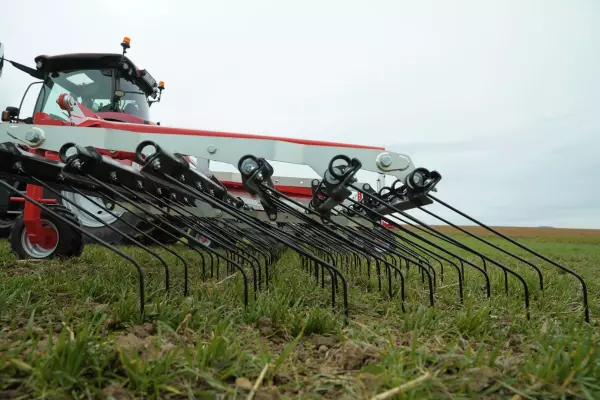
In addition to the herbicide treatment, when the conditions are right, it is possible to weed the plot after emergence, in the autumn, with a tine weeder or rotary hoe. In spring, there are more possibilities in terms of mechanical weed-control, with very positive effects on conditions for crop growth (soil aeration, tillering, etc.). On the other hand, weed destruction can be less effective.
List of problem weeds for wheat and other autumn cereals
- Ryegrass
- Vulpine
- Bromegrass
Agronomic context and challenges
Integrating agronomic strategies into the cropping system
The current agronomic context is marked by increasing pressure from winter grasses that are becoming resistant to herbicides and seriously impacting yield potential. In light of this, weed-control programmes have to be changed to preventative methods, by integrating agronomic techniques. Many agronomic practices can limit the growth of these resistant species in crops, notably:
- Lengthening rotations
- Stale seeding
- Changing the seeding date
Lengthening rotations with winter cereals such as wheat, barley, and triticale is generally unaffected by rotation type, but alternating with spring crops can disrupt the emergence cycle of autumn grasses. Stale seeding works well with winter cereals, helping to limit the emergence of vulpine, ryegrass, bromegrass, and various dicots like wild radish and geraniums. Additionally, changing the seeding date can be highly effective against autumn grasses, though care must be taken to avoid yield loss; in general, early sowing should be avoided in weedy plots.
A well-planned weeding strategy, combining pre- or post-emergence herbicide programmes with these agronomic practices ensures weeding efficiency without the exclusive use of herbicides.
Possible treatment periods depending on mechanical weeding tools
| Crop stage | Pre-emergence | Emergence | 2–3 leaves | Tillering | Weed stage |
|---|---|---|---|---|---|
| Rotary hoe | 🟢Pass possible Speed: 12–15 km/h | ⚠️Pass prohibited | 🟢Pass possible Speed: 15–18 km/h | 🟠With care ❄️ Speed: 15–18 km/h | White filament to 1st leaf |
| Tine weeder | 🟢Pass possible Speed: 8–12 km/h Aggressiveness: ●● or ●●● | ⚠️Pass prohibited | 🟠With care Speed: 3–5 km/h Aggressiveness: ●● | 🟢Pass possible ❄️ Speed: 6–8 km/h Aggressiveness: ●●●● | White filament to 3–4 leaves |
Do not work on frozen crops, as this may cause significant damage.
What weed-control programme to choose for autumn cereals
| Pre‑sowing | Pre‑emergence | Emergence | 1–2 leaves | 2–3 leaves | Tillering | Ear 1 cm | 1–2 nodes | |
|---|---|---|---|---|---|---|---|---|
| BBCH | / | 0 | 10 | 11-12 | 12-13 | 20-29 | 30 | 32 |
| Option 1 All chemical | 🟠💦 | 🟢💦 | 🟠💦 | 🟠💦 | 🟠💦 | |||
| Option 2 Mixed, winter herbicide | 🟢💦 | |||||||
| 🟠⚙️ or ↘ | 🟠⚙️ or ↘ | 🟢⚙️ or ↘ | ||||||
| Option 3 Mixed, spring herbicide | 🟢💦 | 🟢💦 | 🟢💦 | |||||
| 🟠⚙️ or ↘ | 🟢⚙️ or ↘ | 🟢⚙️ or ↘ | 🟠⚙️ or ↘ | |||||
| Option 4 All mechanical | 🟠⚙️ or ↘ | 🟢⚙️ | 2–3 passes 🟢⚙️ or ↘ | 2–3 passes 🟢⚙️ or ↘ |
🟠optional 🟢essential 💦chemical ⚙️rotary hoe or ↘ tine weeder
Purely chemical
When the weed-control method is entirely chemical, it is possible to treat weeds pre- or post-emergence. Depending on how weed-infested the plots are, an end-of-winter weed killer for grasses can be applied with varying degrees of effectiveness.
Mixed, winter herbicide
In cases of known resistance or severe autumn-grass infestation, a pass with a rotary hoe or a tine weeder will optimise the effectiveness of the herbicide. Other mechanical weeding operations can be carried out during the winter or spring to destroy weeds as they emerge and improve crop-growing conditions
Mixed, treatment at the end of the winter
In plots with a low weed count, and if conditions allow, it is possible to delay the herbicide treatment until the spring, by carrying out tine-weeder or rotary-hoe operations in the autumn. End-of-winter herbicide treatments are the cheapest solution and part of a diversified strategy, which limits the development of resistance. On the other hand, the active ingredients are known to be less effective. That’s why this type of weed control is only appropriate for healthy plots.
Purely mechanical
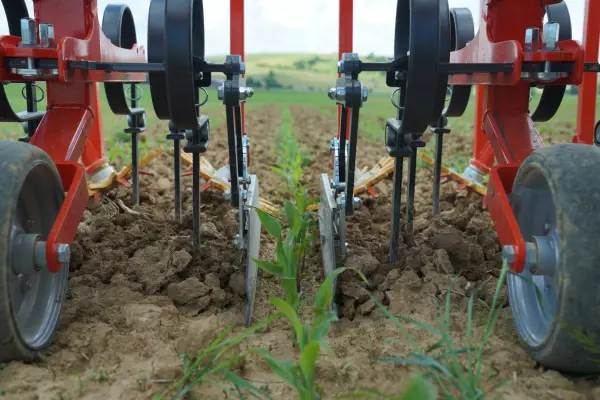
It is possible to eliminate herbicides completely by using mechanical tools several times on the plot, from post-seeding / pre-emergence to spring.

Conclusion and recommendations
It is difficult to control weeds mechanically in winter cereal crops. The lengthy and staggered period of weed development means plots need to be controlled regularly and rigorously. Mechanical weeding can destroy resistant autumn grasses (ryegrass, vulpine), however, and this is sometimes sufficient to control newly emerged dicots, when there are not too many.
Sources:
- Winter cereals – Hoeing has an important role in an effective weed control strategy, Arvalis, 2017
- Weed control in straw cereals, regional recommendations for the 2024–2025 season – West, Arvalis, 2024
- Weed control in cereals: Start off on the right foot to avoid infestation, Arvalis, 2024
- Mechanical weed control in field crops, ITAB, 2012