🔄Cyclical weed, with a preferential growth period
- Longer crop rotation period, diversification


Combine agronomic levers by diversifying crop rotations, using cover crops, and applying techniques such as stale seeding, stubble cultivation, and periodic ploughing to reduce weed emergence before sowing. These practices disrupt weed life cycles, lower seed stocks, and complement chemical or mechanical control for long-term effectiveness.
The effectiveness of herbicides, in field crops, greatly depends on the level of infestation and resistance. The more serious the weed infestation, the more costly it is to keep it under control, and sometimes with disappointing results. Therefore, it is essential to reduce weed emergence before sowing. This involves various preventive agronomic measures, adapted to the species, the cropping system, and soil conditions.
At the end of the treatment period, it is necessary to identify weed species and quantities that remain on the plot. Their weak points should then be identified in order to define an action plan.
Short crop rotations (such as wheat-barley-rapeseed) lead to the development of specialised weed species, making weed control increasingly difficult. Diversification and longer crop rotations are the first measures to implement for better long-term weed control. This can, of course, be difficult as crop choices are often dictated by profitability. The challenge is, therefore, to find a species with a different cycle... and a good market outlet for the farm.
The strength of some weeds, such as vulpine or ryegrass, depends on the season (autumn, spring, etc.). So, alternating between winter, spring, and summer crops is a very effective way of disrupting the cycle of these weeds and limiting their growth. Adding new crops to the rotation is also a way of diversifying treatment methods which reduces the development of resistance and the risk of failure. It is better to have to deal with diverse flora than intense pressure from a single species!
Planting a “weed-clearing” crop makes weed control easier, especially when it is planted prior to a crop that is difficult to weed. In addition, some species, such as alfalfa, have real agronomic benefits, provided that there are suitable outlets in the region.
Cleaning crops | |
|---|---|
| Alfalfa, Temporary grassland | Clover |
| Vetch, Buckwheat | Rye, Oats |
| Cereal + vegetable combination | Field peas |
| Triticale | Spring barley |
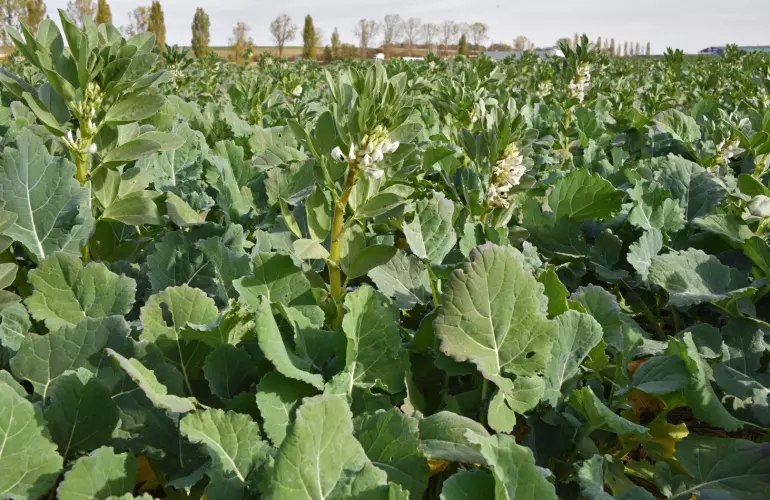
| Broad bean | |
| Spelt | |
| Lentils | |
| Wheat | |
| Sunflower | |
| Rapeseed | Soybean, Maize |
| Peas | Spring protein crops, Lupin |
| Beet | Potato |
Weed‑promoting crops | |
Note: Rows are ordered from the top (most cleaning) to the bottom (most weed‑promoting).
Tillage is an essential part of intercropping because it improves soil structure and makes it more porous for better access to resources. It can also help with weed management.
Shallow stubble cultivation at 3 cm creates a lot of fine soil which is ideal for weeds such as ryegrass. Good tamping during the operation improves seed-soil contact for better weed-seed germination.
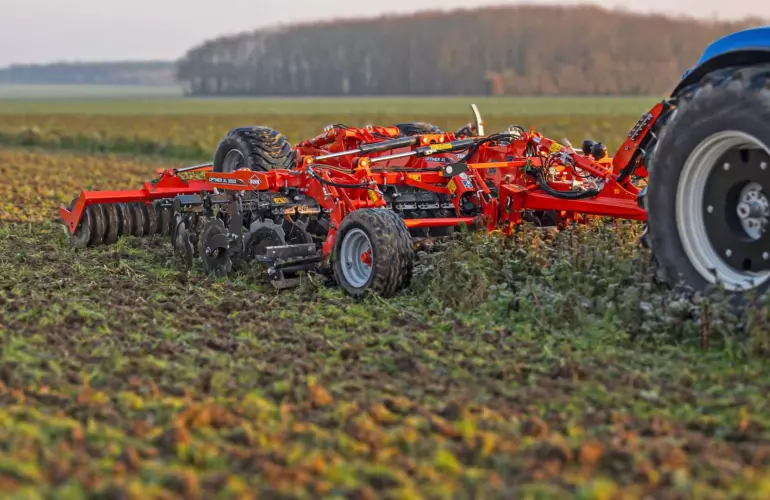
OPTIMER, the disc stubble cultivator is perfect for this type of operation due to its great soil-loosening and shallow working capacity, as well as its rear roller. Be careful, though, not to fragment the rhizomes of perennials when working with the discs.
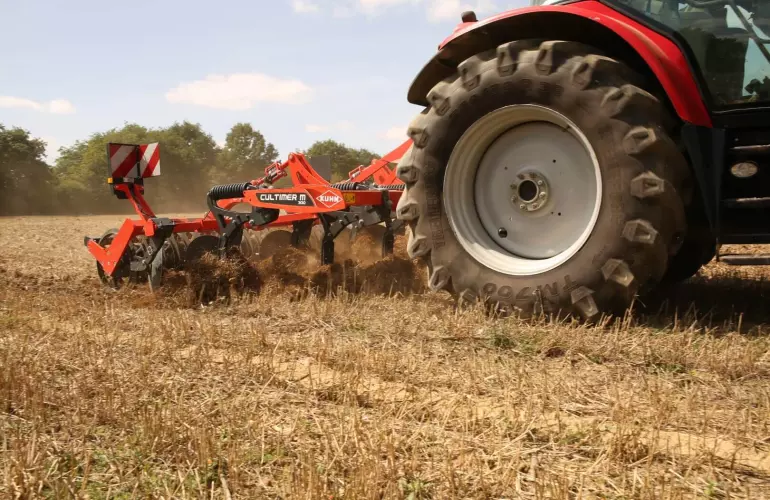
Stubble cultivators with tines, such as the CULTIMER, are useful for deep cultivation (7 cm or more). Equipped with wings for scalping the surface, this tool is capable of destroying weeds and disturbing the rhizomes of perennials by weakening them or bringing them to the surface.
Stale seeding involves preparing a shallow seedbed that stimulates the emergence of weeds, so they can be destroyed before the crop is sown. This reduces the seed stock in the top few centimeters of the soil and prevents weeds from re-emerging in the crop.
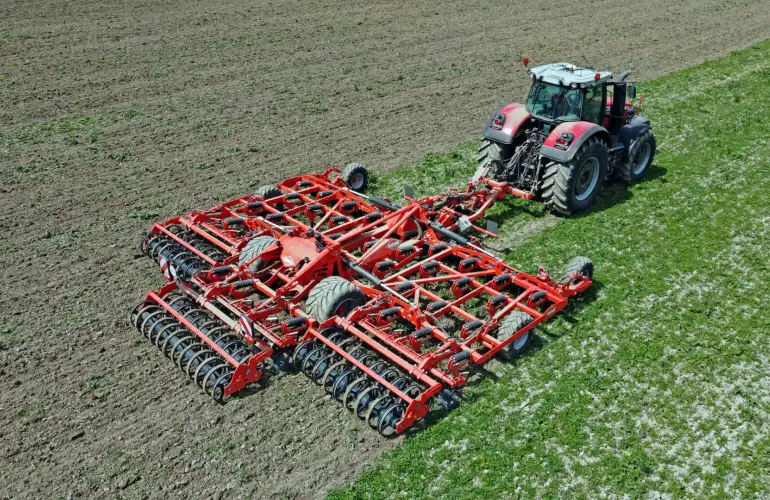
HIGHLANDER, the stubble cultivator with tines, is a highly versatile tool: scalping, mixing in organic matter, and preparing for an intercrop. It simplifies soil preparation and improves fertility. You can even combine operations with the HIGHLANDER thanks to its additional seed drill, which can be used to incorporate microgranules or sow cover crops at the same time.
Most weed seeds germinate in the top 2 centimetres of the soil. When they are buried deeper, many of them can no longer germinate and lose their viability after a few years. This is the case for most grasses: For bromegrass, vulpine and ryegrass, for example, ploughing every 4 to 5 years does the job.
| Wheat sowing date | Number of ryegrass plants/m² (3 leaves – early tillering stage) | Change vs Date 1 |
|---|---|---|
| Date 1: 01/10 | 280 | — |
| Date 2: 21/10 | 94 | -66% |
| Date 3: 10/11 | 34 | -88% |
Postponing seeding is a very effective way of reducing the impact of weeds, especially with cereal crops in the autumn and soya.
It can only be done with varieties suited to late sowing, however, otherwise yield is affected. Seeding later also facilitates stale seeding, allowing more of the weed-seed stock to be depleted before planting the crop.
Combining certain crops with cover crops can increase competition with weeds and limit their growth. For example, a winter crop can be combined with a frost-sensitive plant (e.g., rapeseed-field bean, wheat-white/crimson clover), or both crops can be kept and harvested together (e.g., a wheat-pea combination, practiced in organic farming). It is easy to sow these companion crops using KUHN technologies. The TF 2300 C hopper with double compartment and the ESPRO RC are designed to meet the specific requirements of the technique
Naturally, crop rotations that include long inter-crop periods with bare soil are very conducive to weed growth. During these periods, it is important to cover the soil as quickly as possible after harvesting to stop weeds from growing and reproducing. For the method to work, the cover crop should be composed of competitive, fast-growing species. It is also recommended to combine different plant families that have complementary properties in order to diversify the crop rotation, improve soil structure, and limit diseases.
Intermediate crops: Aims, definition and purpose
Discover our intermediate crop guide