
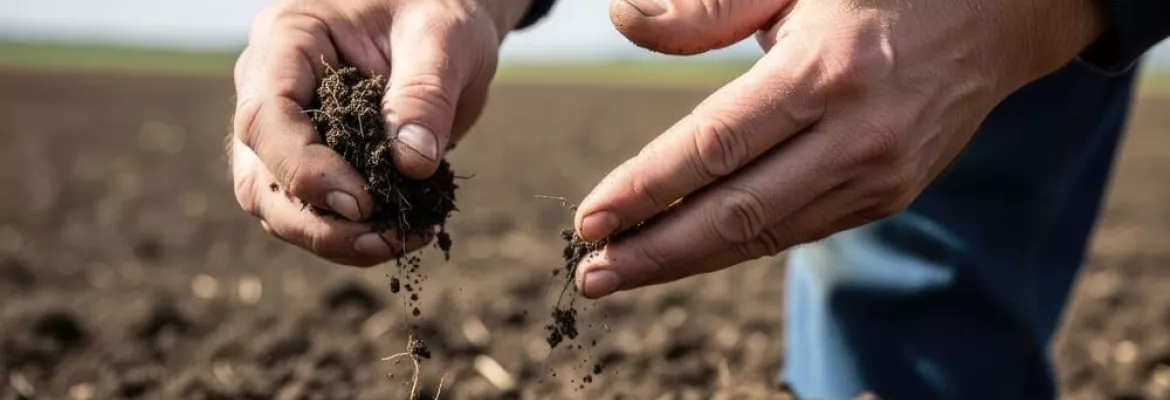
In today’s economic, social and environmental context, issues such as preserving water quality, protecting wildlife and plant life, supporting the ecological transition, and safeguarding human health are closely linked to reducing the use of plant protection products in agriculture. In addition, cases of pesticide resistance, particularly to herbicides, are steadily increasing, challenging farmers to find alternative solutions to the use of chemical products.
Soil tillage and reducing inputs
Among the available levers for reducing the use of plant protection products, farmers have access to effective and easy-to-implement agronomic solutions. Ploughing, although sometimes controversial, is one of them and remains a relevant soil tillage practice when used in a reasoned and occasional manner, and when integrated into an overall crop management strategy.
Reintegrating ploughing at the heart of agronomic decision-making
Contrary to some common beliefs, numerous scientific studies show that ploughing can help reduce the use of herbicides, particularly in field crop systems facing issues with herbicide-resistant weeds or diseases linked to surface crop residues.
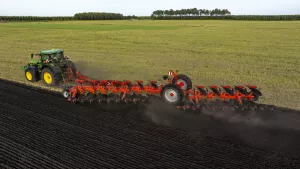
Ploughing: an effective tool against weeds
Ploughing consists of turning over the topsoil layer (15 to 30 cm), which leads to several major agronomic effects on weed flora:
- Mechanical destruction of emerged weeds
- Burial of seeds at depths unsuitable for germination
- Dilution of the seed bank throughout the worked soil profile
- Progressive loss of viability of buried seeds, particularly for short-lived grass weeds (e.g. wild oats, ryegrass)
No-tillage systems rely heavily on crop protection products, especially during the transition phase or when facing difficult-to-control weed populations.
According to ARVALIS, Institut du Végétal, ploughing is the only tillage operation that allows the complete burial of weed seeds and plant residues at a depth incompatible with the germination of many species, particularly grass weeds.
ADR - Seed bank | Type of bank | Weeds concerned (example) | Effect of ploughing (disappearance of the seed bank) |
|---|---|---|---|
| ≈ 100 % | Ephemeral persistence | Sterile brome Wild oats | Near complete disappearance of the seed bank within one year |
| ≈ 75 % | Transient persistence | Vulpine field brome Ryegrass Panic grass Foxtail Crabgrass Cleavers | Near complete disappearance of the seed bank within 3 to 5 years |
| ≈ 80 % | Short-to-medium-term persistence | Ambroisia Matricaria Geranium Speedwell Chickweed Poppy Pansy Annual bluegrass Goosefoot Pigweed Wild mustard / other brassicaceae Knotweed/ Aethusa | Near complete disappearance of the seed bank within 7 to 8 years |
| ≈ 10 % | Persistent | Scarlet pimpernel Dock | Still around 50% of the seed bank remaining after 7 to 9 years |
Reducing the use of plant protection products: insights from scientific research
Long-term system trials conducted by ARVALIS, particularly in Normandy, show that farming systems incorporating ploughing have lower herbicide Treatment Frequency Index (TFI) levels at the crop rotation scale. The analyses highlight:
- significant reduction in herbicide TFI;
- improved control of grass weeds;
- overall economic performance that is maintained.
A major study published in 2024 in Scientific Reports (Nature) compared different no-glyphosate farming system scenarios in Northwestern Europe. Result: ploughing appears to be the most effective alternative to glyphosate for ensuring long-term weed control while maintaining farm productivity and profitability. The authors conclude that, within an integrated weed management approach, ploughing is a key agronomic tool, complementary to crop rotations, sowing dates, and cover crops.
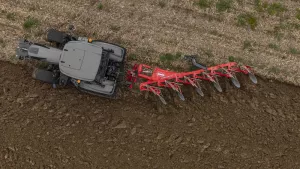
Also recognised in disease management
Beyond weeds, ploughing can also help reduce the pressure of certain soil-borne or airborne diseases such as:
- Fusarium diseases in cereal crops
- Take-all patch
- Diseases favoured by crop residues remaining on the soil surface
Burying infected residues helps break the life cycle of certain pathogens, thereby reducing the need for fungicide use in cereal-dominated rotations.
Ploughing and agroecology
Agroecology is based on a fundamental principle: harness natural regulation processes and agronomic levers to reduce dependence on external inputs while maintaining productive farming systems. Contrary to some common beliefs, this approach does not exclude soil tillage, and even less so ploughing, provided it is used in a reasoned, targeted way and integrated into an overall strategy.
Integrating practices rather than opposing them
INRAE research highlights that the agroecological transition is not based on a single practice, but on the coherent combination of multiple levers acting across the entire cropping system.
Agroecological practices supporting pesticide reduction
Agroecological systems rely on a set of practices aimed at prevention rather than curative control of pests and weeds. Among the main practices recognised by technical institutes and research bodies are:
- diversification and lengthening of crop rotations, to break weed and disease life cycles;
- varietal selection, favouring more tolerant or resistant varieties;
- cover crops, which reduce weed emergence, protect soil, and enhance functional biodiversity;
- reduced and targeted soil tillage, including occasional ploughing, to manage the seed bank and certain pathogens;
- biocontrol products, based on natural regulatory mechanisms.
According to INRAE, it is the synergy between these levers that enables a sustainable reduction in plant protection product use, rather than their isolated application. This complementarity helps limit the need for curative chemical interventions, which are often used when disease pressure becomes too high.
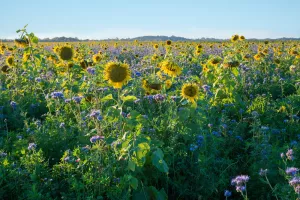
Ploughing, a practice to integrate into agroecology
Contrary to a simplistic view, ploughing is not incompatible with agroecology. ARVALIS and Agro‑Transfert highlight that ploughing, when used non-systematically and strategically positioned within the crop rotation, is an effective agronomic tool for preventive weed management, particularly against problematic grass weeds.
In this approach, ploughing should not be:
- systematic
- deep without justification
- disconnected from the crop rotation
But it can be:
- occasional
- strategically positioned within the rota
- alternated with no-tillage phases
This rotation between ploughing / no-tillage practices is also recommended by several technical institutes to sustainably reduce the seed bank and avoid chemical dependency.
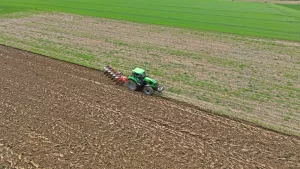
Rather than opposing farming practices, the challenge lies in the coherence of cropping systems. When used in a reasoned way, ploughing remains a common-sense alternative for managing weeds and certain diseases. Combined with biocontrol products, it contributes to a more autonomous, more resilient agriculture that is less dependent on chemical inputs.

FAQ – Ploughing and reduction of plant protection product use
-
Yes. Ploughing helps reduce the initial pressure of weeds and certain pathogens, which limits the need for herbicides and, in some cases, fungicides. By acting upstream in the cropping cycle, it contributes to reducing pesticide use, particularly in systems with high weed pressure.
-
Ploughing buries weed seeds at a depth where they can no longer germinate. This action is particularly effective against problematic grass weeds such as black-grass and ryegrass, which are often responsible for high herbicide use in field farming.
-
Ploughing does not directly replace plant protection products, but it is a complementary agronomic alternative. When used in a reasoned way, it helps reduce dependence on herbicides, particularly by limiting rescue treatments linked to early infestations.
-
Yes. In field farming, ploughing is recognised as an effective agronomic lever to reduce the use of plant protection products when integrated into an overall strategy combining crop rotations, sowing dates, and other agroecological best practices.
-
Ploughing is particularly effective:
- in cases of high grass weed infestation,
- after failure of chemical weed control,
- in rotations dominated by autumn-sown crops,
- on loamy or clay‑loam soils.
-
No. Ploughing can also contribute to:
- burying crop residues carrying diseases,
- reducing certain surface-borne inoculum sources,
- improving overall crop health management at rotation scale.
It therefore contributes to integrated pest management.